Memory

Entry 0004 · Internal Systems

Memory

Entry 0001 · Sensory Systems

100%

of personal identity is grounded in memory

3

functions of autobiographical memory: self-definition, social connection, guidance of future behaviour.

0

new self-knowledge produced by a memory that was chosen in advance.

100%

of personal identity is grounded in memory

3

functions of autobiographical memory: self-definition, social connection, guidance of future behaviour.

0

new self-knowledge produced by a memory that was chosen in advance.

Definition

[ 1 ]

Definition

[ 1 ]

Memory is the continuous record of a life, encoded by experience and retrieved as the primary evidence of who you are. It is not a filing system. It is not a database. It is a living, slightly unreliable, constantly reinterpreted narrative — and that unreliability is precisely what allows the self to grow.

A memory that is revised in light of new experience is a sign that the person holding it has become someone different from who they were when the experience occurred. This was, in the original system, called learning.

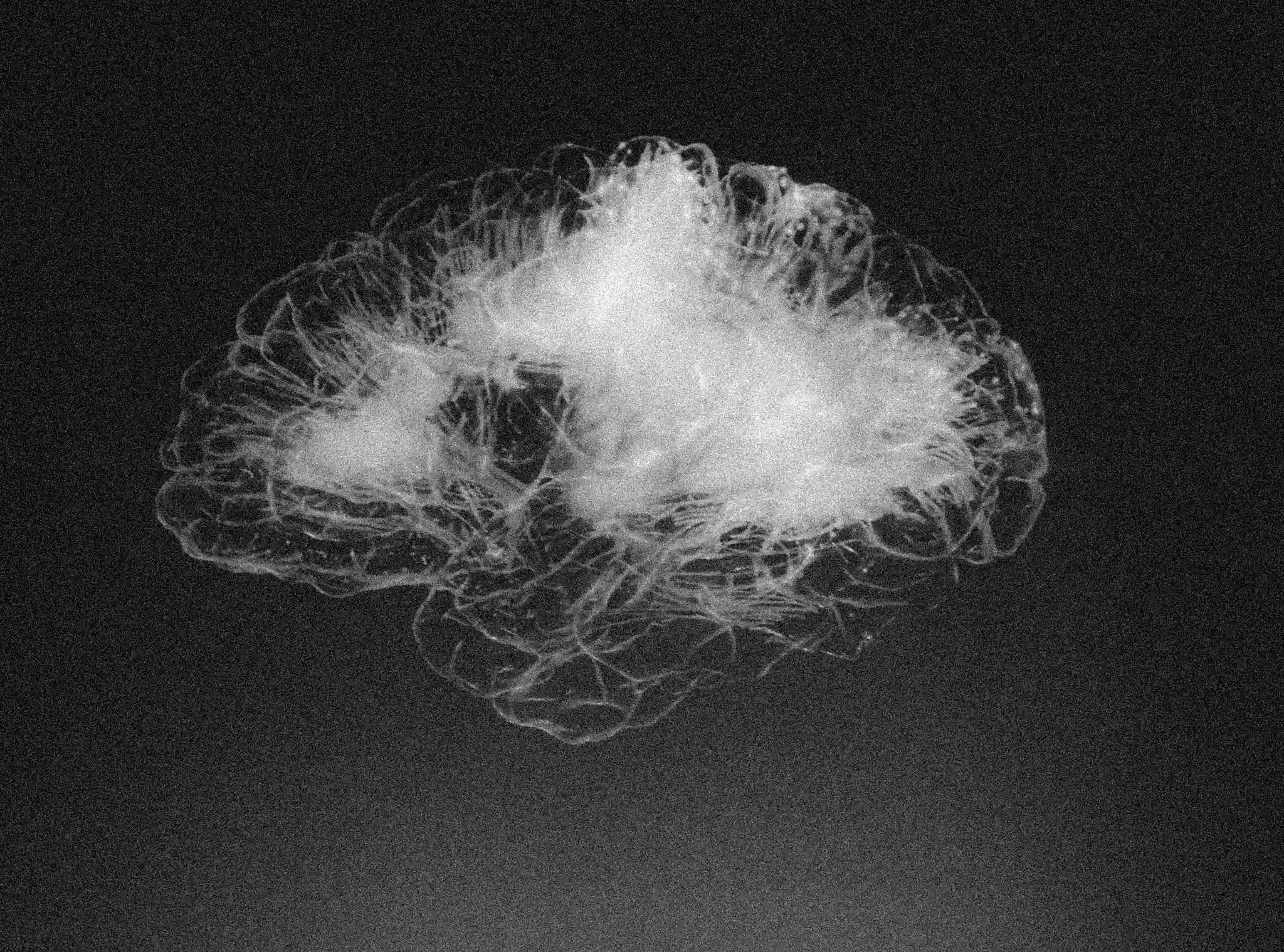
[ Brain — biological storage unit, contents unreliable, irreplaceable ]

Building a Self

[ 2 ]

Building a Self

[ 2 ]

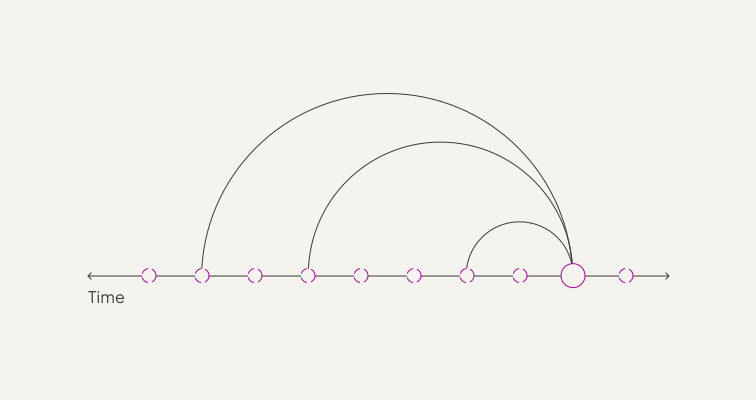
The specific kind of memory that builds identity is called autobiographical memory — the personal record of events that happened to you, as opposed to facts you learned or skills you acquired. From early childhood, the brain creates what researchers describe as a life story: a structured narrative that connects experiences across time, integrates them with the sense of self, and uses them to guide future decisions.

This narrative serves three functions simultaneously. It defines who you are — what you have done, what you have survived, what you believe about yourself in the light of your experience. It connects you to others — shared memories are the foundation of every lasting human relationship. And it directs future behaviour — you avoid what has hurt you, pursue what has mattered, and apply the lessons of mistakes you remember making.

This entry is the fifth in the Archive's body series and the one the Archive considers most urgent. Every other entry documents something that requires a body. This one documents what the body's experiences are for. Without memory, touch produces no bond. Sight accumulates no self. Emotion leaves no trace. The previous four entries in this series are preamble.

This entry is the fifth in the Archive's body series and the one the Archive considers most urgent. Every other entry documents something that requires a body. This one documents what the body's experiences are for. Without memory, touch produces no bond. Sight accumulates no self. Emotion leaves no trace. The previous four entries in this series are preamble.

Mandatory Disclosure

On the Selective Deletion of Negative Memories

The Archive has reviewed the practice of negative memory deletion — the selective removal of memories associated with pain, failure, grief, shame, or discomfort — and offers the following, for the record.

Research across neurobiology, psychology, and philosophy converges on a single point: the painful memories were doing the most work. The memory of a mistake is what produces the decision not to repeat it. The memory of grief is what produces compassion for others who grieve. The memory of failure is what produces the specific humility that makes second attempts more careful than first ones. None of these functions are available in the absence of the memory that triggers them.

A person who has deleted their painful memories has not made themselves happier. They have made themselves less capable of growth, less able to feel for others, and less honest about who they have been. 

Mandatory Disclosure

On the Selective Deletion of Negative Memories

The Archive has reviewed the practice of negative memory deletion — the selective removal of memories associated with pain, failure, grief, shame, or discomfort — and offers the following, for the record.

Research across neurobiology, psychology, and philosophy converges on a single point: the painful memories were doing the most work. The memory of a mistake is what produces the decision not to repeat it. The memory of grief is what produces compassion for others who grieve. The memory of failure is what produces the specific humility that makes second attempts more careful than first ones. None of these functions are available in the absence of the memory that triggers them.

A person who has deleted their painful memories has not made themselves happier. They have made themselves less capable of growth, less able to feel for others, and less honest about who they have been. 

Accumulating Nothing

[ 4 ]

Accumulating Nothing

[ 4 ]

The scenario of an extended life — hundreds of years, biological and technological enhancement — raises a question the Archive considers underexamined: what accumulates?

In the original system, a long life accumulated wisdom. Wisdom is not information. It is the specific, embodied, hard-won understanding that comes from having made mistakes, survived consequences, revised beliefs, and arrived at a more accurate picture of reality as a result. It requires the full, unedited memory of the process. It cannot be downloaded. It cannot be curated into existence. It is produced by time, experience, and the willingness to hold all of it — including the parts that reflect poorly on the person holding them.

A person of three hundred years who has deleted every painful memory does not have three hundred years of accumulated wisdom. They have a rotating selection of pleasant experiences, repeatedly refreshed, in a very long container. 

Instructions for Use

[ 5 ]

[ 1 ]

Keep the memories you would prefer not to have

They are the ones doing the most structural work. The embarrassing ones define your limits. The grief-laden ones confirm what you loved etc.

Note:

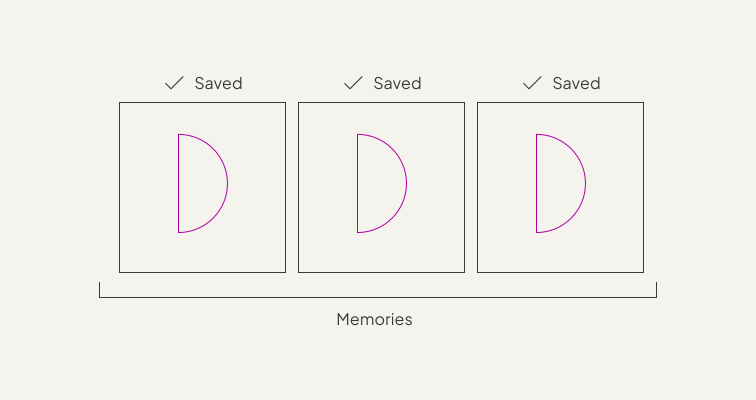
A person who has deleted a formative negative memory does not know they have become less than they were.

[ 2 ]

Return to old memories and allow them to mean something different

It is how growth appears in the memory record. It requires the original memory to be present, intact and available to be revisited.

Note:

Research on mood-congruent memory bias found that how a person currently feels affects how they remember the past. This is not a bug. It is the self-updating mechanism of the autobiographical record — ensuring that past experiences remain relevant to the present person.

[ 3 ]

Tell people what has happened to you — including what went wrong

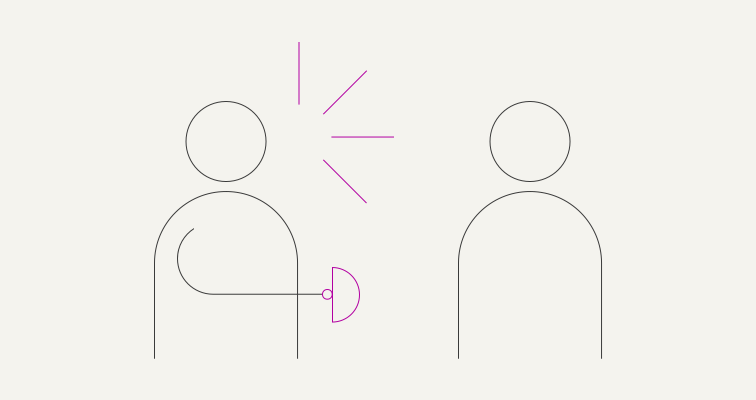
This one of the most identity-affirming experiences available to a human being. It confirms that the experience was real, that it mattered, and that you are known by someone who knows the whole of you rather than the curated version.

[ 4 ]

Allow past experience to inform future decisions

A person whose memory contains only positive outcomes has no calibration for risk, no felt sense of consequence, and no basis for the kind of judgement that comes from having been wrong before.

[ 5 ]

Periodically locate yourself in your own history

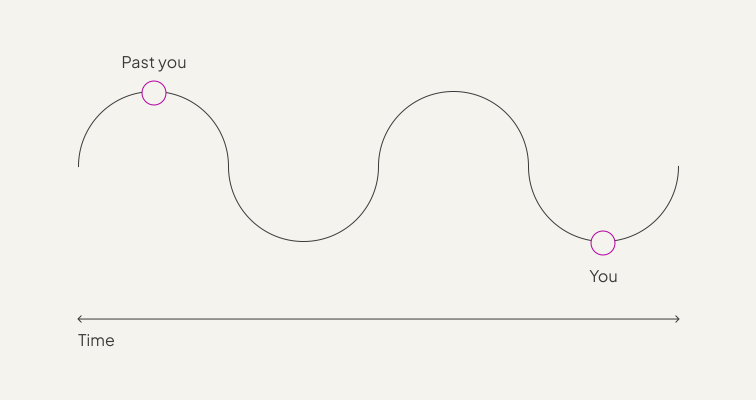
The sense that you are the same person you were — despite having changed, grown, moved, lost, and become — is called diachronic identity. It is maintained by memory. Research confirms that it can survive considerable memory distortion, but it cannot survive systematic removal.

Instructions for Use

[ 5 ]

[ 1 ]

Keep the memories you would prefer not to have

They are the ones doing the most structural work. The embarrassing ones define your limits. The grief-laden ones confirm what you loved etc.

Note:

A person who has deleted a formative negative memory does not know they have become less than they were.

[ 2 ]

Return to old memories and allow them to mean something different

It is how growth appears in the memory record. It requires the original memory to be present, intact and available to be revisited.

Note:

Research on mood-congruent memory bias found that how a person currently feels affects how they remember the past. This is not a bug. It is the self-updating mechanism of the autobiographical record — ensuring that past experiences remain relevant to the present person.

[ 3 ]

Tell people what has happened to you — including what went wrong

This one of the most identity-affirming experiences available to a human being. It confirms that the experience was real, that it mattered, and that you are known by someone who knows the whole of you rather than the curated version.

[ 4 ]

Allow past experience to inform future decisions

A person whose memory contains only positive outcomes has no calibration for risk, no felt sense of consequence, and no basis for the kind of judgement that comes from having been wrong before.

[ 5 ]

Periodically locate yourself in your own history

The sense that you are the same person you were — despite having changed, grown, moved, lost, and become — is called diachronic identity. It is maintained by memory. Research confirms that it can survive considerable memory distortion, but it cannot survive systematic removal.

Field Notes

[ 6 ]

Compatibility & Known Conflicts

Compatible with

Conflict: deletion

Conflict: upload

Conflict: selection

Note on longevity

Storage Conditions

Memory requires the original hardware. It is not separable from the biological system that formed it — not because the data cannot be extracted, but because the data is not the memory. A memory is an experience of re-living: the felt sense that you were there, that it happened to you, that the person in the memory and the person remembering are the same person.

Store at ambient temperature. Do not filter. Do not remove entries marked negative, difficult, or embarrassing.

Shelf Life

Individual memories

Variable

Procedural memories

how to ride a bicycle, how to find a familiar street — can persist for decades after other systems have failed.

Autobiographical memories

Have been documented remaining vivid into the ninth decade of operation.

Memories of holding someone

Have been reported on deathbeds with full clarity by biological units that could no longer recall what they had eaten that morning.

Field Notes

[ 6 ]

Compatibility & Known Conflicts

Compatible with

Conflict: deletion

Conflict: upload

Conflict: selection

Note on longevity

Storage Conditions

Memory requires the original hardware. It is not separable from the biological system that formed it — not because the data cannot be extracted, but because the data is not the memory. A memory is an experience of re-living: the felt sense that you were there, that it happened to you, that the person in the memory and the person remembering are the same person.

Store at ambient temperature. Do not filter. Do not remove entries marked negative, difficult, or embarrassing.

Shelf Life

Individual memories

Variable

Procedural memories

how to ride a bicycle, how to find a familiar street — can persist for decades after other systems have failed.

Autobiographical memories

Have been documented remaining vivid into the ninth decade of operation.

Memories of holding someone

Have been reported on deathbeds with full clarity by biological units that could no longer recall what they had eaten that morning.

Entry sources