



27
distinct emotional states identified in the human range. None are optional.
5
basic emotions present in every recorded human culture.
Infinate
theoretical bonding capacity
27
distinct emotional states identified in the human range. None are optional.
5
basic emotions present in every recorded human culture.
Infinate
theoretical bonding capacity
Definition
[ 1 ]
Definition
[ 1 ]
Emotion is the original internal guidance system. It ran automatically, responded to both internal and external events, and produced a cascade of physical, cognitive, and behavioural effects without requiring the user's permission to begin. It was not a mood. It was not a preference. It was a rapid, full-body response to something that mattered — and it communicated that mattering through the chest, the stomach, the throat, the eyes, and every square centimetre of skin, simultaneously.

[ Shock — unscheduled emotional response ]
Core Emotions
[ 2 ]
Core Emotions
[ 2 ]
Psychologist Paul Ekman established that five emotions are universal across all human cultures — appearing on the faces of people who had never shared a language, a continent, or a century. They are the skeleton beneath every other emotional experience.
Enjoyment
Sadness
Fear
Anger
Disgust
Psychologist Paul Ekman established that five emotions are universal across all human cultures — appearing on the faces of people who had never shared a language, a continent, or a century. They are the skeleton beneath every other emotional experience.
Enjoyment
Sadness
Fear
Anger
Disgust
Mandatory Disclosure
On the Practice of Selecting Emotions
The Archive has reviewed the practice of emotion selection — the ability to choose which emotional states to experience and to suppress or delete those which are unwanted — and offers the following observations, which it notes are observations rather than recommendations, because the Archive has accepted that recommendations are no longer being acted upon.
A person who has deleted their unpleasant emotions has not made their life better. They have made their self smaller. They have removed the primary data source from which identity is constructed, and replaced it with a curated feed of pre-approved states that confirm what they already believed about themselves before anything happened.
Mandatory Disclosure
On the Practice of Selecting Emotions
The Archive has reviewed the practice of emotion selection — the ability to choose which emotional states to experience and to suppress or delete those which are unwanted — and offers the following observations, which it notes are observations rather than recommendations, because the Archive has accepted that recommendations are no longer being acted upon.
A person who has deleted their unpleasant emotions has not made their life better. They have made their self smaller. They have removed the primary data source from which identity is constructed, and replaced it with a curated feed of pre-approved states that confirm what they already believed about themselves before anything happened.
Emotions in the Body
[ 4 ]
Emotions in the Body
[ 4 ]
Emotions were not events that happened in the mind and were then reported by the body. They were events that happened in both simultaneously. Fear tightened the chest. Grief sat in the throat. Anxiety lived in the stomach. Love registered as warmth across the entire upper body. These were not metaphors. They were measurable physiological events, documented across cultures, remarkably consistent.
This matters because removing the body does not remove the emotional signal — it removes the channel through which the signal was received, processed, and discharged. An emotion experienced without a body has nowhere to go.
Fear
Anxiety
Grief
Love
Anger
Instructions for Use
[ 5 ]
[ 1 ]
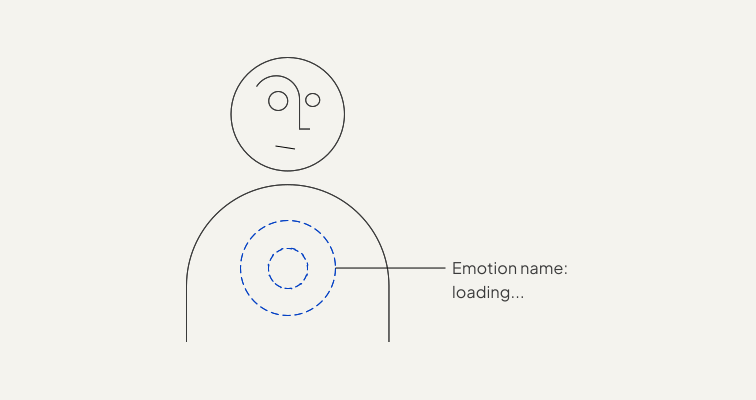
Feel the sensation before you label the emotion
Before reaching for a word, locate the feeling in the body. The physical sensation is the emotion in its purest, most accurate form.
[ 2 ]
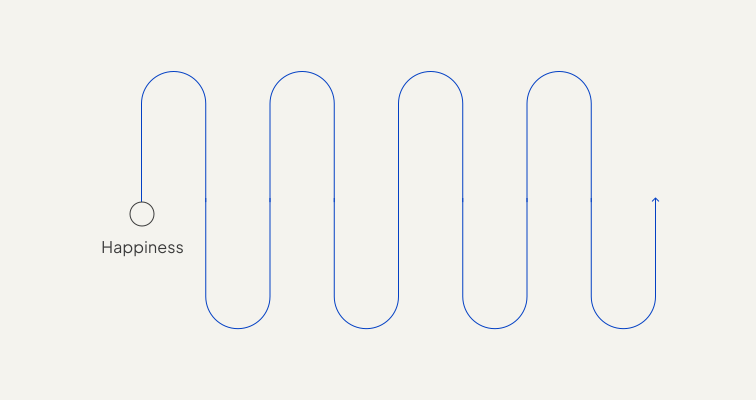
Allow the emotion to complete its function before dismissing it
Every emotion in the original system had a function and a natural duration. Grief produced clarity about what mattered. Fear produced information about what needed attention and etc.
Note:
Suppressed emotions do not disappear. They are stored. The body keeps an inventory.
[ 3 ]
Expand your emotional vocabulary beyond five words
Research has found that humans who can name their emotions with greater precision regulate them more effectively. Reducing the entire emotional range to a small set of approved labels does not simplify emotional experience.

Note:
Please find attached the full wheel of emotions developed by Gloria Willcox (1982) and extended by Robert Plutchik.
[ 4 ]
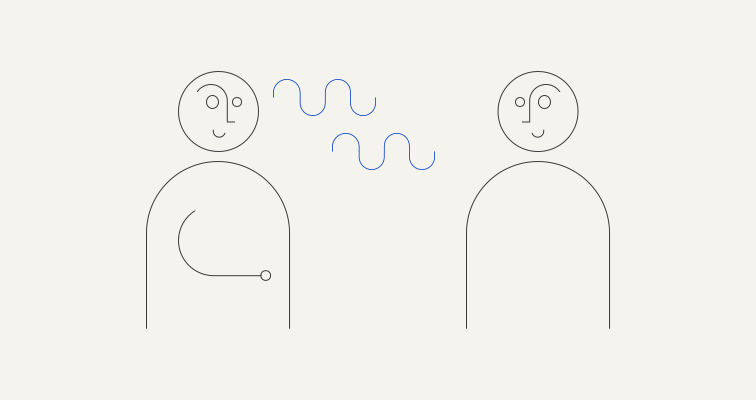
Communicate the emotion to another person, in real time, with your body present
Expressing emotions reduced their intensity and produced a sense of being understood. Being understood, in the original system, required being visible.
Note:
transmitting an emotional label like "I am currently experiencing sadness [selected: moderate; duration: 4 hours]" is a data transfer. It does not produce the neurological response in the receiver that an actual emotional expression produces.
[ 5 ]
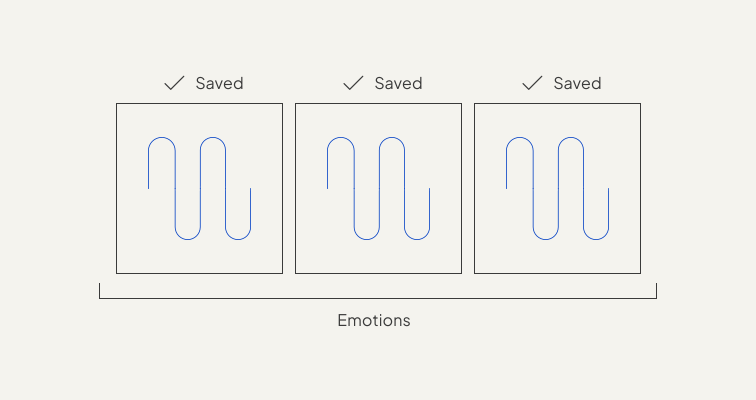
Do not delete negative emotional experiences
The negative emotions were not errors. They were the most information-dense part of the system. Every significant act of human growth, creativity, moral development, and genuine connection in the historical record was either produced by a difficult emotion, or was a response to one.
Instructions for Use
[ 5 ]
[ 1 ]
Feel the sensation before you label the emotion
Before reaching for a word, locate the feeling in the body. The physical sensation is the emotion in its purest, most accurate form.
[ 2 ]
Allow the emotion to complete its function before dismissing it
Every emotion in the original system had a function and a natural duration. Grief produced clarity about what mattered. Fear produced information about what needed attention and etc.
Note:
Suppressed emotions do not disappear. They are stored. The body keeps an inventory.
[ 3 ]
Expand your emotional vocabulary beyond five words
Research has found that humans who can name their emotions with greater precision regulate them more effectively. Reducing the entire emotional range to a small set of approved labels does not simplify emotional experience.
Note:
Please find attached the full wheel of emotions developed by Gloria Willcox (1982) and extended by Robert Plutchik.
[ 4 ]
Communicate the emotion to another person, in real time, with your body present
Expressing emotions reduced their intensity and produced a sense of being understood. Being understood, in the original system, required being visible.
Note:
transmitting an emotional label like "I am currently experiencing sadness [selected: moderate; duration: 4 hours]" is a data transfer. It does not produce the neurological response in the receiver that an actual emotional expression produces.
[ 5 ]
Do not delete negative emotional experiences
The negative emotions were not errors. They were the most information-dense part of the system. Every significant act of human growth, creativity, moral development, and genuine connection in the historical record was either produced by a difficult emotion, or was a response to one.