

Body language
Entry 0003 · Communication Systems
65%
of all communication between people was nonverbal
1/25
seconds — duration of a micro-expression. Too fast to fake. Too fast to hide.
7
universal facial expressions. Present in every recorded human culture.
65%
of all communication between people was nonverbal
1/25
seconds — duration of a micro-expression. Too fast to fake. Too fast to hide.
7
universal facial expressions. Present in every recorded human culture.
Definition
[ 1 ]
Definition
[ 1 ]
BODY LANGUAGE is the continuous, largely involuntary transmission of information through physical movement, posture, facial expression, gesture, and the use of space. It ran alongside human speech for the entirety of recorded history, carrying more information than the words themselves, and it did so without requiring the speaker's awareness, consent, or cooperation.
This entry documents a communication system that could not be switched off, edited, or uploaded. The body was not a neutral container for the self. It was broadcasting the self continuously, in all directions, to anyone paying attention.
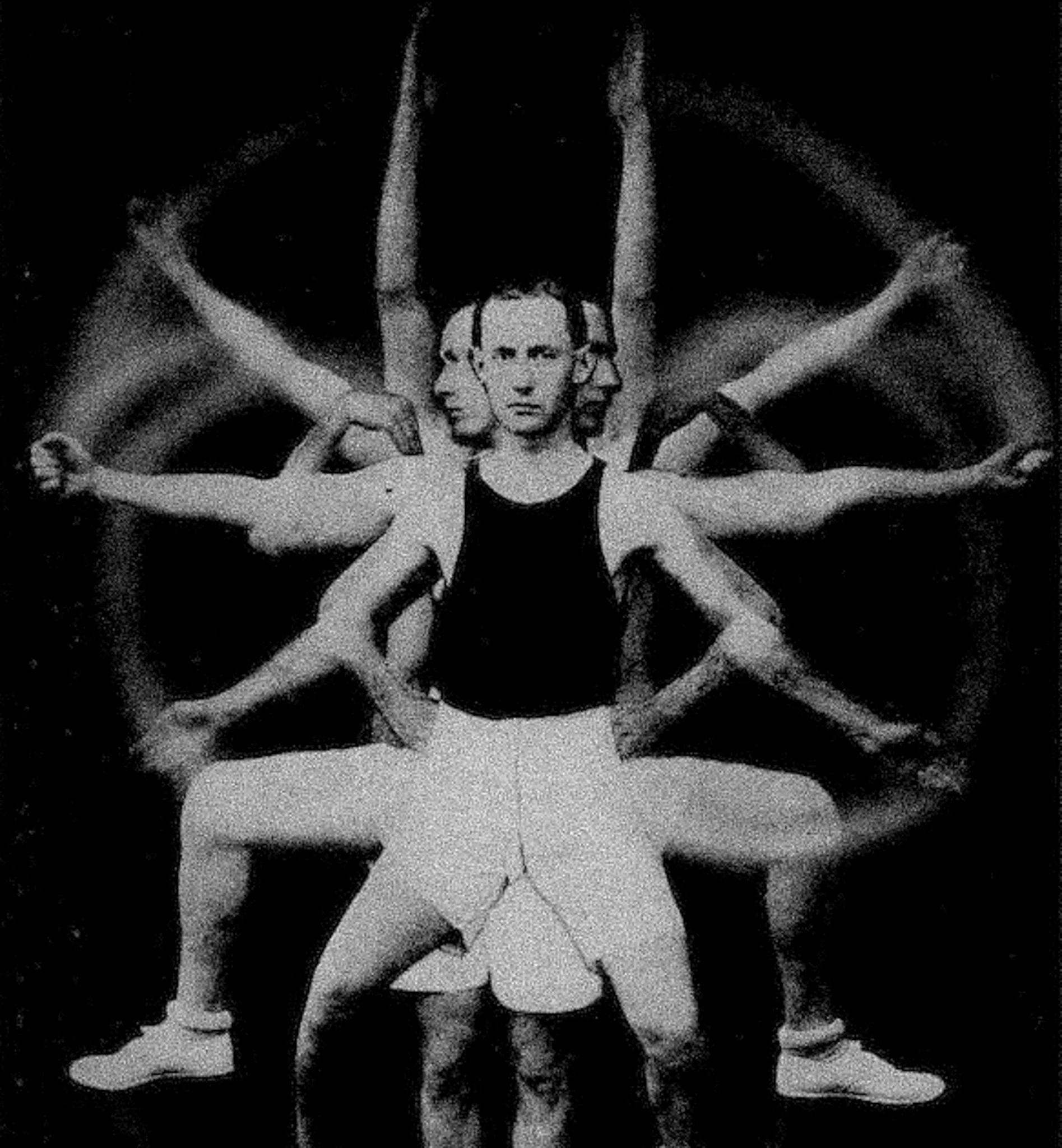
[ Human body in motion — involuntary broadcast system ]
Body Gesture Types
[ 2 ]
Body Gesture Types
[ 2 ]
Emblems
Illustrators
Regulators
Adaptors
Emblems
Illustrators
Regulators
Adaptors
Mandatory Disclosure
On the Elimination of Involuntary Signals
The Archive notes the following with the care it deserves: the appeal of a communication system you can fully control is understandable. Words can be chosen. Tone can be managed. The presentation of self can be curated down to considerable precision. What body language provided — and what is lost when the body is removed — is the channel that could not be managed. It was the part of communication that told the truth regardless of what the rest of the system was doing.
A society in which all communication is chosen, filtered, and transmitted without involuntary signal is not a society with better communication. It is a society in which no one can be read, which means no one can be truly known, which means trust must be built on entirely different foundations — and the Archive notes, with interest, that no one has yet identified what those foundations are.
Mandatory Disclosure
On the Elimination of Involuntary Signals
The Archive notes the following with the care it deserves: the appeal of a communication system you can fully control is understandable. Words can be chosen. Tone can be managed. The presentation of self can be curated down to considerable precision. What body language provided — and what is lost when the body is removed — is the channel that could not be managed. It was the part of communication that told the truth regardless of what the rest of the system was doing.
A society in which all communication is chosen, filtered, and transmitted without involuntary signal is not a society with better communication. It is a society in which no one can be read, which means no one can be truly known, which means trust must be built on entirely different foundations — and the Archive notes, with interest, that no one has yet identified what those foundations are.
Proxemics
[ 4 ]
Distances That Meant Something
Proxemics
[ 4 ]
Distances That Meant Something
Anthropologist Edward Hall coined the term "proxemics" in 1959 to describe the documented, structured way in which humans use physical distance to communicate relationship, intention, and emotional state. The distances were specific, culturally inflected, and carried precise social meaning.
Intimate 0 – 45 cm
Reserved for people the body had decided to fully trust: partners, children, close family. Entry into this zone without invitation produced an immediate, instinctive stress response.
Public 3.6 m+
Speeches, lectures, performances. Anonymous distance. The zone at which individuals became audience members, observers, members of a crowd rather than participants in a conversation. Notably, this is the only zone that remains fully operational in digital communication environments.
Personal 45 cm – 1.2 m
Close friends, familiar colleagues. Comfortable enough for personal conversation; far enough to maintain individual presence. The distance at which people began and ended most meaningful relationships.
Social 1.2 – 3.6 m
Acquaintances, professional interactions, most public conversation. Formal enough to signal respect; close enough to maintain genuine engagement. The zone in which most of civic and professional life was conducted
Instructions for Use
[ 5 ]
[ 1 ]
Let your face react
When something happens in front of you, allow your face to respond to it in real time. This is called a facial expression, and it is the primary mechanism by which other people know what you actually think, as opposed to what you have decided to transmit.

[ 2 ]
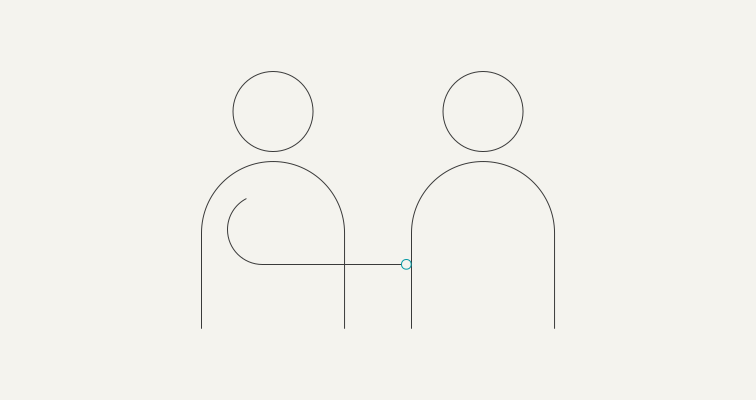
Stand at the correct distance
When speaking with someone you know reasonably well, position yourself within personal distance — approximately one arm's length. This distance communicates: I am present, and you have my attention.
[ 3 ]
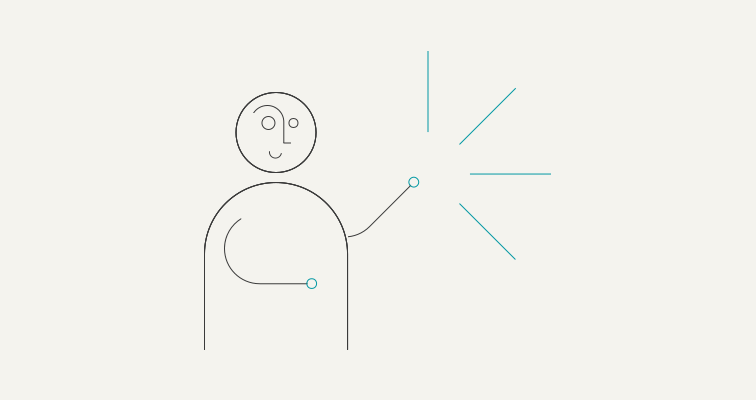
Use your hands when you speak
Allow your hands to move while you talk. Do not choreograph this. Gesture is not decoration for speech — it is part of how thought is produced. Suppressing gesture does not make communication more precise. It makes thinking harder.
[ 4 ]
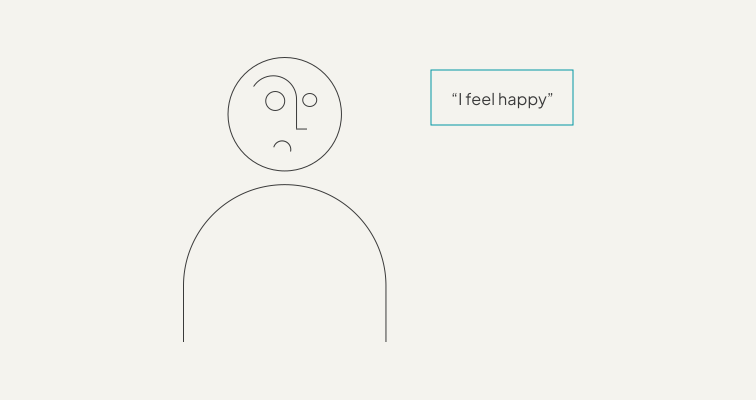
Let the body disagree with the words
There will be moments when your body and your words say different things. The disagreement is information. It is the system working correctly — flagging that something has not yet been fully processed. Allow it to be visible. Other people will respond to the real signal.
Instructions for Use
[ 5 ]
[ 1 ]
Let your face react
When something happens in front of you, allow your face to respond to it in real time. This is called a facial expression, and it is the primary mechanism by which other people know what you actually think, as opposed to what you have decided to transmit.
[ 2 ]
Stand at the correct distance
When speaking with someone you know reasonably well, position yourself within personal distance — approximately one arm's length. This distance communicates: I am present, and you have my attention.
[ 3 ]
Use your hands when you speak
Allow your hands to move while you talk. Do not choreograph this. Gesture is not decoration for speech — it is part of how thought is produced. Suppressing gesture does not make communication more precise. It makes thinking harder.
[ 4 ]
Let the body disagree with the words
There will be moments when your body and your words say different things. The disagreement is information. It is the system working correctly — flagging that something has not yet been fully processed. Allow it to be visible. Other people will respond to the real signal.